
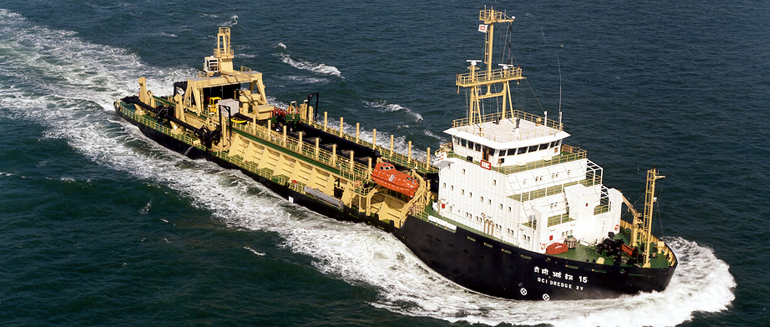
Dredging services provider Dredging Corporation of India (DCI) is exploring business opportunities into high-demand regions like the Middle East and Southeast Asia, even as India continues to be the focus market for the company.
Currently, the company is also eyeing opportunities in inland dredging especially for reservoirs and canals across the country.
Expanding role of dredging
Dredging Corporation of India caters to capital dredging at major ports and smaller maintenance dredging.
“Both are vital for national development. We are committed to expanding its dredger fleet, including the upcoming TSHD Godavari (12,000 m³), and looking beyond India into high-demand regions like the Middle East and Southeast Asia,” Durgesh Kumar Dubey, Managing Director and CEO (Additional Charge), Dredging Corporation of India said at a recent event.
Also read: Cochin Shipyard, Drydocks World partner to boost ship repair in India
He further said that there is a massive demand for dredging capacity, not only from new ports like Vizhinjam in Kerala or Galathea Bayin Nicobar but also from industries building their own captive ports across India.
Dubey noted that the untapped potential of inland dredging, especially for reservoirs and canals suffering from siltation, which reduces water holding and flood management capacities. With aging dams across the country, he has urged fleet manufacturers and contractors to focus on developing smaller suction and cutter dredgers tailored for inland water bodies.
Also read: Kochi set to emerge as global shipbuilding hub: Modi
“This sector is growing fast. With the government’s focus on inland silt management, there’s recurring demand that can’t be ignored. Waterways are the most cost-effective and eco-friendly means of transport and maintaining them is both a business opportunity and a national imperative,” he said.
Dubey also mentioned upcoming government meetings with key ministries to align efforts on this front, indicating a coordinated push towards waterway and reservoir dredging.
Need for collaboration
Dubey highlighted that the transformative initiatives such as the Dedicated Freight Corridor and the recently announced Rs 25,000 crore Maritime Development Fund, along with the creation of Sagar Mala Development Corporation (now an NBFC) are the key enablers of growth in the sector.
Citing example of Visakhapatnam Port, he said that port-led industrialisation, has resulted in development of strategic port infrastructure catalysing industrial growth attracting major companies like HPCL, RINL, and AMNS. “Ports like Visakhapatnam have enabled the creation of industrial hubs supported by seamless road, rail, and air connectivity—this is the power of port-led growth,” he noted.
Dubey has urged stakeholders to collaborate for partnerships and investments in India’s dredging sector. He emphasised the need for capable contractors, innovative technologies, and aligned private-public collaboration to achieve national maritime goals.
“Dredging Corporation is ready to lead, but we need partners such as investors, contractors, manufacturers, etc. because without last-mile connectivity and execution support, our collective efforts may fall short,” he added.